
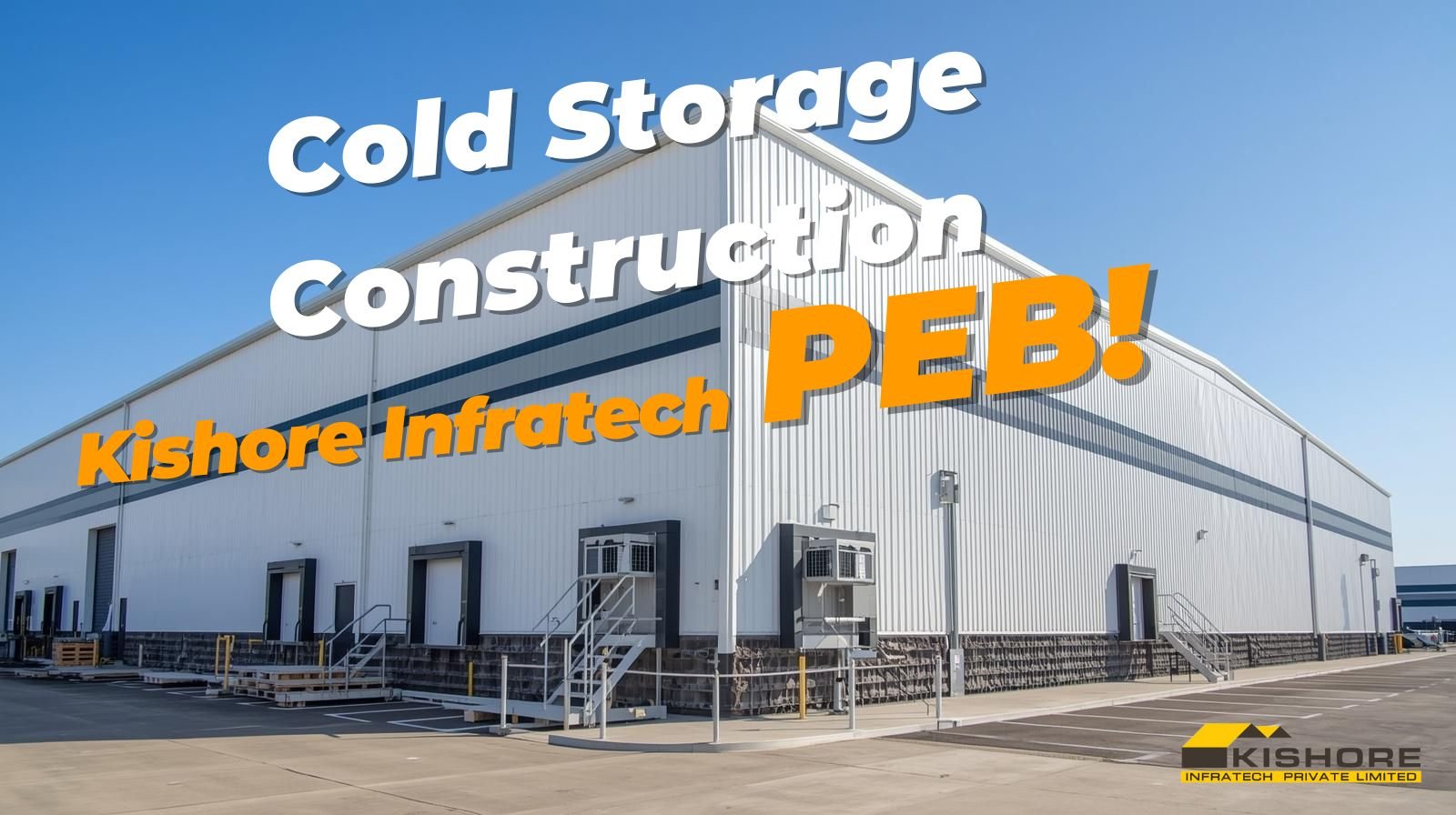
Cold storage construction using PEB has become the dominant approach for building temperature-controlled facilities in India. As the cold chain sector enters an accelerated growth phase in 2026 — driven by rising consumption, export-oriented agribusiness, seed preservation, dairy logistics, and pharma distribution — Pre-Engineered Building technology offers unmatched speed, thermal efficiency, scalability, and cost-effectiveness for investors, developers, and operators.
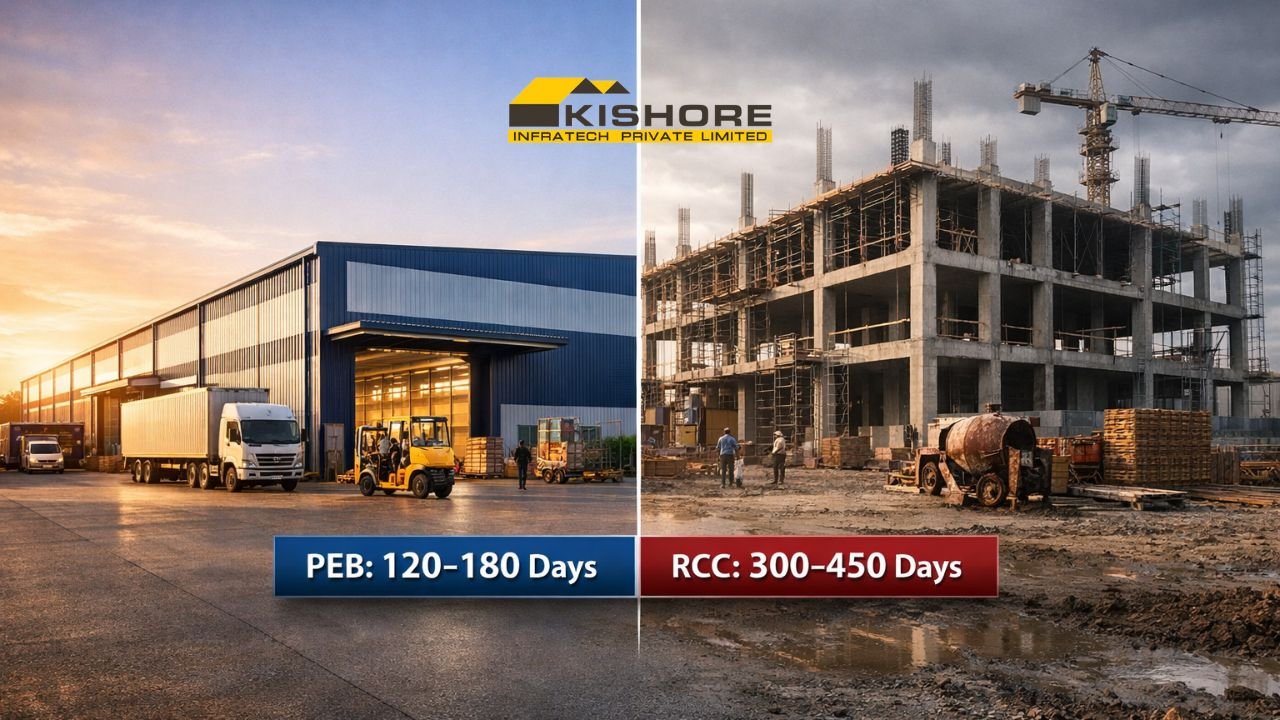
Quick Answer: Cold storage construction using PEB costs 20-30% less than traditional RCC and completes 40-60% faster — typically 3-6 months vs 10-14 months. PEB structures provide superior thermal performance through factory-fabricated steel frames, seamless insulated panel integration (PUF/PIR at 60-150mm thickness), and minimal thermal bridging. The PEB structure accounts for 20-30% of total project cost, while the refrigeration system takes 30-40%. Hyderabad and Telangana have emerged as cold chain hotspots due to food processing clusters, seed industry demand, Genome Valley pharma logistics, and government incentives under TS-iPASS. Kishore Infratech Private Limited delivers turnkey PEB cold storage solutions with pharma-grade and food-grade construction capabilities.
This comprehensive 2026 guide covers everything an investor, consultant, architect, or engineering manager needs to know about building world-class cold storage using PEB technology — from temperature zoning and insulation engineering to construction workflows and cost structures — tailored for Telangana and India’s evolving industrial landscape.
Why 2026 Is a Landmark Year for Cold Storage Construction Using PEB
India’s cold chain infrastructure has entered an accelerated growth phase in 2026. Regions like Hyderabad and the wider Telangana industrial belt have emerged as cold chain hotspots due to:
- Rapid expansion of food processing clusters
- Telangana’s strong seed industry requiring controlled-atmosphere storage
- Large poultry, meat, and dairy production volumes
- Logistics parks and e-commerce warehousing hubs
- Genome Valley’s pharma supply chain requirements for vaccine and API cold chain
As the demand grows, cold storage construction using PEB has become the preferred solution because of its speed, thermal performance, and cost-effectiveness compared to traditional RCC construction.
Understanding Cold Storage Construction Using PEB
Key takeaway: Cold storage is not just a warehouse with cooling — it is a highly engineered temperature-controlled environment. PEB technology enhances every aspect: factory-fabricated steel frames ensure structural precision, seamless cladding eliminates thermal bridging, clear spans of 30-50m maximize usable floor area, and modular design allows phased expansion without disrupting existing cold rooms.
A modern cold storage built using PEB requires:
- Robust thermal insulation with PUF/PIR panels
- Airtight panel systems with vapor barriers
- Advanced ammonia or freon refrigeration integration
- Hygienic interiors meeting FSSAI and pharma-grade standards
- Efficient racking systems for high-bay storage
- Energy-optimized building envelope with reduced thermal bridging
Using PEB for cold storage enhances these capabilities through factory-fabricated steel frames, precision engineering, clear spans up to 30-50m, seamless cladding and panel integration, and faster delivery. In Telangana, where industries demand quick commissioning, PEB cold storage construction offers a decisive advantage.
India’s Cold Chain Transformation in 2026 — Why PEB Leads the Market
Several national trends have made PEB the new standard for cold storage construction:
Surge in Agricultural & Food Processing Investments
Cold storages for fruits, vegetables, grains, spices, meat, and dairy require controlled environments — something PEBs integrate smoothly with insulated panels, delivering facilities that maintain precise temperature zones from +25°C ambient down to -60°C deep freeze.
Rapid Expansion of Pharma Cold Chain
Hyderabad’s Genome Valley and pharma logistics require reliable cold rooms and freezer chambers for vaccines, APIs, and bulk pharma — with strict GDP (Good Distribution Practice) compliance that PEB’s precision construction supports.
Demand for Quick-Commerce & E-Grocery Fulfillment Centers
Urban cold storages for 10-minute delivery platforms must be built rapidly — PEB construction speed of 3-6 months vs 10-14 months for RCC is unmatched in meeting this demand.
Telangana’s Strategic Industrial Push
Through TSIIC and policy incentives like TS-iPASS, Telangana actively supports warehousing, logistics, and cold chain growth. PEBs reduce project risks and construction delays across rural and semi-urban districts.
Energy Efficiency Mandates
2026 energy regulations emphasize reducing heat leakage, improving thermal envelopes, and integrating renewable energy — areas where PEB structures outperform conventional RCC by delivering 25-35% lower energy consumption through superior insulation and reduced thermal bridging.
Types of Cold Storage Facilities Built Using PEB
Key takeaway: PEB cold storage construction suits virtually every cold chain application — from simple ambient seed storage at +10-25°C to ultra-sensitive pharma cold rooms at -60°C. The modular PEB envelope adapts to each requirement by varying panel thickness (60-150mm), refrigeration capacity, and airtightness standards.
Cold storage construction using PEB is suitable for nearly every category:
- Multi-Commodity Cold Storages — fruits, vegetables, dairy, spices requiring flexible temperature ranges
- Frozen Warehouses — long-term storage of meat, seafood, frozen foods at -18 to -25°C
- Blast Freezers & IQF Units — rapid freezing of perishables to -35°C and below
- Controlled Atmosphere (CA) Cold Rooms — require airtight, highly insulated PEB envelopes for gas-controlled storage
- Pre-Cooling Rooms — reducing field heat from harvested produce before storage or transportation
- Ripening Chambers — banana, mango, and other climacteric fruit ripening units benefit from PEB airtightness
- Pharma & Vaccine Cold Rooms — highly sensitive temperature control environments requiring GDP-compliant PEB design
- Seed Storage Cold Rooms — critical for Telangana’s prominent seed industry requiring +10-15°C controlled atmosphere
Temperature Zones in Cold Storage Construction (2026 Standards)
Key takeaway: Each temperature zone requires different insulation thickness, vapor barrier placement, and refrigeration capacity. Chilled storage (0 to +5°C) uses 60-80mm PUF panels, frozen storage (-18 to -25°C) requires 100-120mm with enhanced vapor barriers, and deep freeze (-30°C and below) demands 120-150mm panels with zero thermal bridging at all PEB joints — the most critical engineering challenge in cold storage construction.
| Zone Type | Temperature (°C) | Typical Products | Panel Thickness | PEB Integration Notes |
|---|---|---|---|---|
| Chilled Storage | 0 to +5°C | Fresh produce, dairy | 60-80mm | Moisture control, panel alignment, PEB airtightness |
| Frozen Storage | -18 to -25°C | Meat, frozen foods | 100-120mm | Enhanced insulation, vapor barrier, anti-condensation detailing |
| Deep Freeze | -30°C & below | Seafood, pharma | 120-150mm | Zero thermal bridging in PEB joints, heavy-duty doors |
| Controlled Ambient | +10 to +25°C | Seeds, packaged goods | 40-60mm | Low heat gain PEB envelope, HVAC integration |
Engineering Design Requirements for PEB Cold Storage
This is where PEB technology truly excels. A cold storage built using PEB in 2026 must meet engineering criteria across structural design, insulation envelope, refrigeration integration, and material handling.
Structural Engineering (PEB Frame Design)
Load considerations for PEB cold storage include dead load (steel structure + insulated panels), live load (racking systems, forklifts), HVAC equipment loads, wind loads tailored to Telangana districts, and roof slope optimized for monsoon drainage.
Steel selection uses high-tensile steel (E250-E350 grade), cold-rolled secondary members for precision fitment, and galvanized purlins for enhanced durability in high-moisture cold storage environments.
Thermal bridge prevention is the most critical engineering challenge — thermal bridging through steel connections can cause condensation, ice formation, and structural damage. In 2026, best practice includes thermal separators at all steel-to-panel junctions, insulated fasteners, double-layer wall systems, and anti-condensation PEB design at every connection point.
Insulation & Building Envelope Engineering
Key takeaway: A cold room is only as good as its insulation. PUF panels (40-42 kg/m³ density) are the most common choice for chilled and frozen storage, while PIR panels (45-50 kg/m³ density) offer higher fire performance for pharma and food processing applications. Floor insulation uses XPS boards to prevent ground frost heave in freezer rooms — a failure point often overlooked in traditional construction.
Critical envelope features in PEB cold storage construction include:
- Tongue-and-groove panel joints for airtight assembly
- Vapor barriers installed on the warm side of insulation
- Silicone-sealed connections at all panel intersections
- External PEB cladding with zero gaps
- Thermal break spacers at every steel-to-panel interface
Refrigeration Integration
PEB structures support complete refrigeration system integration including ammonia or freon refrigeration lines, evaporator coil mounting points, drainage systems, multi-tier rack cooling layouts, and service mezzanines for compressors and control systems.
Docking Bay & Material Handling
Modern cold storages in Telangana require dock levelers, dock shelters, temperature-controlled loading bays, and wide driveways for heavy truck traffic. PEB makes all of these faster and more economical to integrate compared to RCC construction.
Cost Structure of Cold Storage Construction Using PEB (2026)
Key takeaway: The refrigeration system is the single largest cost component at 30-40% of total project cost — not the building structure itself. The PEB structure accounts for only 20-30%, meaning the faster and cheaper PEB erection directly reduces overall project timelines and interest costs. For a 10,000 sq ft cold storage, total project cost ranges from approximately ₹4,500-8,500 per sq ft depending on temperature zone requirements.
| Component | Description | Share of Total Cost (Approx %) |
|---|---|---|
| PEB Structure | Steel frame, roofing system, wall cladding | 20-30% |
| Insulated Wall & Roof Panels | PUF/PIR panels with airtight joints | 15-25% |
| Refrigeration System | Compressors, evaporators, condensers, piping | 30-40% |
| Floor Insulation | XPS/PIR boards for freezer rooms, anti-frost heave systems | 5-8% |
| Electrical & Automation | Lighting, controls, power distribution, monitoring systems | 5-10% |
| Material Handling Systems | Racking, pallets, forklifts, dock levelers | 5-10% |
Full Construction Process: 20-Step PEB Cold Storage Workflow (2026)
Key takeaway: A complete PEB cold storage project follows 4 phases across 20 steps — from feasibility analysis to commissioning. The total timeline is 3-6 months for PEB vs 10-14 months for RCC. The critical path runs through refrigeration system sourcing (Phase 3) and panel installation (Phase 4), which run in parallel with PEB fabrication to compress the schedule.
Phase 1 — Pre-Construction (Weeks 1-4)
- Feasibility analysis and site assessment
- Product mix & temperature zone planning
- PEB structural concept design
- Insulation modeling and thermal simulation
- Refrigeration load calculation
- MEP flow design and power estimation
Phase 2 — Engineering (Weeks 3-8)
- PEB structural drawings and shop detailing
- Panel layout & thermal envelope design
- HVAC/Refrigeration integration engineering
- Floor insulation and anti-frost heave detailing
- Docking bay and material handling engineering
Phase 3 — Fabrication & Procurement (Weeks 5-12)
- PEB steel fabrication in factory
- Insulated panel manufacturing
- Refrigeration system sourcing and procurement
- Electrical and automation systems procurement
Phase 4 — Construction & Commissioning (Weeks 8-20)
- Foundation work & floor insulation installation
- PEB steel structure erection
- Insulated panel installation & sealing
- Refrigeration system installation & commissioning
- Temperature validation testing & handover
Advantages of Cold Storage Construction Using PEB
Key takeaway: PEB cold storage delivers 6 decisive advantages over traditional RCC: 40-60% faster construction (3-6 months vs 10-14 months), superior thermal performance through factory-precision panel integration, easy modular expansion by adding bays, 25-35% lower energy costs through better insulation, support for high-bay racking systems up to 12m height, and optimized roofing design that reduces solar heat gain — particularly important in Telangana’s hot summers where ambient temperatures regularly exceed 42°C.
- Fastest construction method — PEB systems reduce timelines by 40-60%, crucial for seasonal produce and demand cycles
- Superior thermal performance — minimal heat leakage, better sealing, and reduced condensation compared to RCC walls
- Easy expansion — businesses in Telangana often expand capacity and PEB allows easy bay addition without disrupting existing cold rooms
- Lower operational cost — better insulation means 25-35% lower energy consumption, accelerating ROI
- Designed for heavy racking — PEB frames support high-bay pallet racks up to 12m and mezzanine floors
- Optimized for Telangana’s climate — efficient roofing design reduces solar heat gain during long summers exceeding 42°C
Why Hyderabad & Telangana Prefer PEB Cold Storage Construction
Telangana’s cold chain demand is driven by proximity to major supply chains — seed production clusters, dairy belts, fruit & vegetable corridors, meat and poultry hubs, and Genome Valley pharma routes. Government support through TS-iPASS, food processing park incentives, and warehouse & cold chain subsidies further reduces project costs. Hyderabad’s rapid industrial growth demands infrastructure that can be commissioned quickly — and PEB is the only construction technology that consistently delivers cold storage projects in 3-6 months.
Why Choose Kishore Infratech for Cold Storage Construction Using PEB
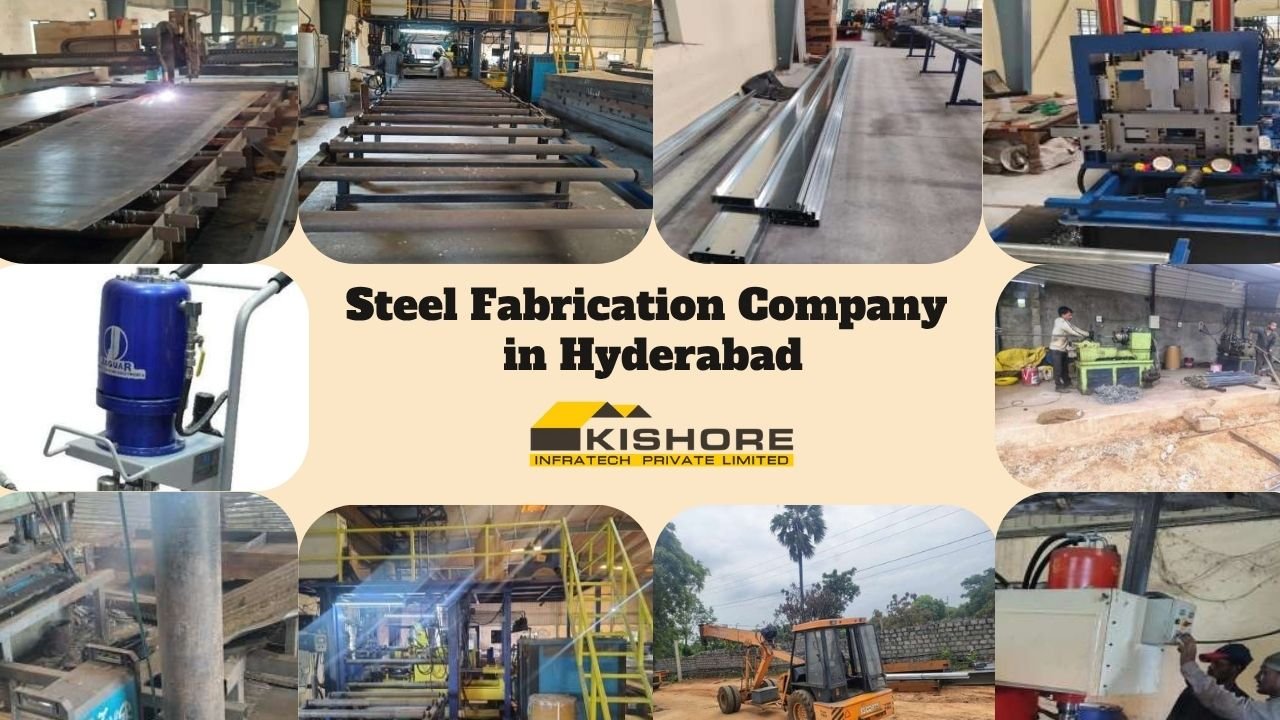
Kishore Infratech Private Limited (KIPL), an ISO 9001:2015 certified PEB manufacturer headquartered in Hyderabad with 45+ years of steel fabrication experience and 700+ completed projects, delivers turnkey PEB cold storage solutions across Telangana and South India. Based on our experience building cold storage and temperature-controlled facilities across Hyderabad, Medchal, Sangareddy, Karimnagar, Warangal, and Siddipet districts, KIPL offers:
- Advanced PEB engineering with STAAD Pro and Tekla Structures design
- Turnkey cold storage envelope solutions from foundation to commissioning
- Expertise in PUF/PIR panel integration with zero thermal bridging
- Docking bay design for efficient loading/unloading operations
- Pharma-grade and food-grade construction meeting FSSAI and GDP standards
- Telangana-specific execution experience with local permit and compliance knowledge
- On-time project delivery with penalty-backed timeline commitments
Frequently Asked Questions
How long does a PEB cold storage project take to complete?
A PEB cold storage project typically takes 3-6 months from design to commissioning, depending on scale, temperature zones, and refrigeration complexity. A simple 5,000 sq ft chilled storage can be completed in 10-12 weeks, while a multi-temperature 50,000 sq ft facility with deep freeze zones takes 5-6 months. Traditional RCC cold storage construction takes 10-14 months for comparable projects.
What insulation thickness is recommended for PEB cold storage?
Insulation thickness depends on the target temperature: 60-80mm PUF/PIR panels for chilled rooms (0 to +5°C), 100-120mm for frozen storage (-18 to -25°C), and 120-150mm for deep freeze (-30°C and below). Controlled ambient storage (+10 to +25°C) for seeds and packaged goods uses 40-60mm panels. PIR panels are preferred over PUF for applications requiring higher fire resistance ratings.
Is PEB stronger than RCC for cold storage construction?
PEB is not ‘stronger’ in compressive strength — but it is the better choice for cold storage because it offers superior thermal envelope performance, faster construction (40-60% time savings), easier panel integration with zero thermal bridging, and modular expansion capability. RCC walls are prone to condensation issues and thermal bridging at concrete-to-insulation interfaces, which PEB avoids through precision-engineered steel-to-panel connections.
Can PEB cold storage be expanded later?
Yes — this is one of PEB’s biggest advantages for cold storage. The modular bay design allows you to add additional cold rooms, expand existing chambers, or add new temperature zones by extending the PEB structure. Expansion can be done without shutting down existing operations. KIPL designs initial structures with future expansion provisions built into the foundation and frame layout.
Is PEB cold storage suitable for pharma cold chain?
Yes — PEB cold storage meets strict pharmaceutical GDP (Good Distribution Practice) requirements when designed with the right specifications. This includes PIR panels for fire resistance, stainless steel interior cladding for hygiene, redundant refrigeration systems for temperature assurance, temperature mapping and validation protocols, and clean room-grade door seals. KIPL has delivered pharma-grade cold storage solutions for clients in Hyderabad’s Genome Valley corridor.
What is the cost of building a cold storage using PEB in India?
Cold storage construction cost using PEB varies by temperature zone: chilled storage (0 to +5°C) costs approximately ₹4,500-6,000 per sq ft, frozen storage (-18 to -25°C) costs ₹6,500-8,500 per sq ft, and deep freeze (-30°C and below) costs ₹10,000-15,000 per sq ft. The PEB structure itself accounts for 20-30% of total cost, while the refrigeration system takes 30-40%. PEB construction saves 20-30% compared to equivalent RCC cold storage.
What is the difference between PUF and PIR panels for cold storage?
PUF (Polyurethane Foam) panels have a density of 40-42 kg/m³ and are the most common choice for cold storage due to excellent thermal insulation at lower cost. PIR (Polyisocyanurate) panels have higher density (45-50 kg/m³), better fire resistance (self-extinguishing), and slightly superior thermal performance — making them preferred for pharma cold storage, food processing facilities, and applications requiring higher fire safety ratings. PIR costs 15-20% more than PUF.
How much electricity does a PEB cold storage consume?
Electricity consumption depends on temperature zone, insulation quality, and facility size. A well-insulated 10,000 sq ft frozen storage (-18°C) typically consumes 80-120 kW of connected load with monthly electricity costs of ₹3-5 lakhs. PEB cold storage with proper insulation consumes 25-35% less energy than equivalent RCC facilities due to superior thermal envelope performance and reduced air infiltration.
What government subsidies are available for cold storage construction in Telangana?
Telangana offers several incentives for cold storage projects: TS-iPASS provides fast-track approvals and capital subsidies up to 25% of project cost. NABARD’s cold chain subsidy covers 35-50% of project cost for eligible categories. The Ministry of Food Processing (PMFME and PLI schemes) offers additional support. NCCD (National Centre for Cold-chain Development) provides technical and financial assistance. KIPL assists clients with all subsidy documentation and compliance.
How much land is needed for a 10,000 sq ft cold storage?
A 10,000 sq ft cold storage facility typically requires 0.5-0.75 acres of land. This includes the cold storage building footprint, truck maneuvering area, loading docks, compressor room, electrical room, office space, and perimeter road. For facilities with multiple temperature zones or future expansion plans, 1-1.5 acres is recommended. Land should be on stable soil with good drainage — KIPL conducts site assessment as part of the pre-construction phase.
Is cold storage a profitable business in India in 2026?
Yes — cold storage is one of India’s most profitable infrastructure investments in 2026. India currently has only 37-39 million MT of cold storage capacity against a requirement of 61+ million MT, creating massive unmet demand. Cold storage rental yields of 12-18% significantly outperform standard warehousing (8-12%). The payback period for a well-located PEB cold storage is typically 4-6 years. With KIPL’s PEB technology, faster construction (3-6 months vs 10-14 months) accelerates time-to-revenue.
Can a cold storage have multiple temperature zones in one PEB building?
Yes — multi-temperature cold storage within a single PEB structure is one of the most operationally efficient configurations. KIPL designs PEB buildings with internal partition walls separating different temperature zones (ambient, chilled, frozen, deep freeze), each with independent insulation thickness and refrigeration systems. This reduces land requirement, shares common infrastructure (power, docks, office), and allows efficient material flow between zones.
Data methodology: Technical specifications and cost percentages in this guide are based on Kishore Infratech Private Limited’s cold storage and temperature-controlled facility projects across Telangana (2020-2026), current 2026 PUF/PIR panel pricing from leading Indian manufacturers, refrigeration system benchmarks from Bitzer, Danfoss, and Kirloskar, and NCCD cold chain industry reports. All figures are estimates — actual costs vary by project specifics, temperature requirements, and site conditions.
Conclusion
Cold storage construction using PEB has become the definitive choice for India’s rapidly expanding cold chain sector in 2026. With 40-60% faster construction timelines, 20-30% lower costs compared to RCC, superior thermal envelope performance, and modular expansion capability, PEB technology addresses every challenge that modern cold storage operators face — from seasonal produce demand cycles to pharma GDP compliance.
Telangana’s combination of food processing growth, seed industry demand, Genome Valley pharma logistics, and TS-iPASS government support makes it one of India’s most attractive markets for cold storage investment. With Kishore Infratech Private Limited as your turnkey PEB partner, you get 45+ years of engineering expertise, factory-fabricated precision, and Telangana-specific execution knowledge — from feasibility analysis to commissioning.
For detailed consultation on your cold storage project and customized engineering proposals, contact KIPL at 9440407852 or visit www.kishoreindustries.in to explore how our advanced PEB cold storage solutions can accelerate your project timeline and optimize your investment.