
Padel and pickleball court construction in India has gone from a niche curiosity to one of the fastest-growing categories in sports infrastructure, with new clubs opening every month across Hyderabad, Bengaluru, Mumbai, Chennai, and Pune. But the two sports are not interchangeable, and the single most expensive mistake an owner can make is treating a padel court like a pickleball court — or treating either like a generic badminton hall. Padel needs structural glass walls that take ball impact and player rebound loads; pickleball needs a precise hard-court surface with generous run-off. This guide consolidates the court dimensions, surfacing, structural glass loads, lighting, and clear-span PEB roofing specifications that Kishore Infratech uses when engineering padel and pickleball facilities across South India.
Quick Answer: A standard padel court measures 20 m × 10 m (a double court) enclosed by 3 m–4 m tempered glass and mesh walls, while a standard pickleball court measures 13.41 m × 6.10 m (44 ft × 20 ft) of playing area, requiring a total footprint of about 18.3 m × 9.1 m (60 ft × 30 ft) with safety run-off. Padel courts demand structural glass capable of withstanding ball impact and player rebound, mounted on a steel frame; pickleball courts demand a level acrylic or cushioned-acrylic hard surface over a concrete or asphalt base. Both perform best as column-free PEB structures with 6 m–9 m clear height, 500–750 lux club lighting (1000+ lux for tournaments), and proper surface drainage. A single padel court occupies roughly the same footprint as three pickleball courts.
Disclaimer: All dimensions and specifications in this guide are based on World Padel Tour / International Padel Federation (FIP) court standards, USA Pickleball / International Pickleball Federation (IPF) court standards, and Indian construction practice under IS 800, IS 875, and NBC 2016. Final structural, glazing, surfacing, and lighting design must be carried out by qualified consultants for the specific site, climate zone, and intended level of play. Figures shown are typical reference values for planning purposes.
Why Padel and Pickleball Are Exploding in India — and Why It Matters for Construction
Padel and pickleball are the two fastest-growing racquet sports in the world, and India is now firmly part of that wave. Padel — a glass-walled, doubles-focused sport that blends tennis and squash — has driven a rush of premium urban clubs in Hyderabad, Bengaluru, Mumbai, and Gurugram. Pickleball — a paddle sport played on a court the size of a badminton court — is spreading even faster because it is cheaper to build, easy to learn, and fits into smaller plots, rooftops, and repurposed warehouses. For an owner or investor, the opportunity is real, but so is the risk of building the wrong structure for the sport.
The reason construction quality matters so much is that both sports are unforgiving of shortcuts. A padel court with under-specified glass will crack under repeated ball and body impact. A pickleball court with a poorly levelled surface will produce dead bounces and player complaints within weeks. And because both sports are usually played year-round and after sunset, the covering structure — a clear-span PEB roof with the right height and lighting — is what determines whether the facility can operate in monsoon, summer heat, and night hours. Get the envelope right and the courts book out; get it wrong and no surfacing or lighting retrofit will fix it.
Padel vs Pickleball: Court Dimensions and Run-Off Reference Table
Key takeaway: A standard padel court is 20 m × 10 m of enclosed playing area; a standard pickleball court is 13.41 m × 6.10 m of playing area but needs a 18.3 m × 9.1 m total footprint once safety run-off is added. One padel court occupies roughly the same ground area as three pickleball courts, which is the single biggest factor in deciding how many courts a given plot can hold.
| Parameter | Padel (Standard Double) | Pickleball (Standard) |
|---|---|---|
| Playing area (L × W) | 20 m × 10 m | 13.41 m × 6.10 m (44 ft × 20 ft) |
| Recommended total footprint | 20 m × 10 m (walls are the boundary) | 18.3 m × 9.1 m (60 ft × 30 ft) with run-off |
| Net height (centre) | 0.88 m centre, 0.92 m at posts | 0.86 m centre (34 in), 0.91 m at posts (36 in) |
| Service zone | Service boxes 3 m from back glass | Non-volley zone (“kitchen”) 2.13 m (7 ft) each side |
| Enclosure | Mandatory — 3 m glass + 1 m mesh (4 m total at ends) | Optional fencing; no playing walls |
| Minimum clear height under roof | 6 m recreational, 8 m for competition | 6 m recreational, 7 m for competition |
| Courts per ~600 m² plot | ~2 courts | ~5–6 courts |
| Governing body | International Padel Federation (FIP) | USA Pickleball / International Pickleball Federation (IPF) |
Padel Court Structural Glass: The Specification That Owners Get Wrong
The defining feature of a padel court is its enclosure: walls of glass and mesh that are part of the playing surface, because the ball can be played off them like in squash. This makes the glass a structural element, not a decorative one. It must withstand repeated high-speed ball impact, occasional player collisions, and wind loads if the court is outdoor or semi-covered. Using ordinary glazing here is dangerous and will fail. The correct specification is tempered (toughened) safety glass, and the supporting steel frame must be engineered to FIP geometry.
Key takeaway: Padel court glass must be 10 mm minimum tempered safety glass (12 mm preferred for premium and competition courts), mounted on a hot-dip galvanised or powder-coated steel frame designed to IS 800, with the back walls 3 m glass plus 1 m mesh and the side walls a stepped glass-and-mesh profile. Never use annealed or non-tempered glass on a padel court.
| Component | Specification | Engineering Note |
|---|---|---|
| Wall glass | 10–12 mm tempered safety glass | Must carry impact + rebound loads; 12 mm for competition and outdoor wind exposure |
| Steel frame | Galvanised / powder-coated steel posts & beams | Designed to IS 800; corrosion protection critical in coastal/humid zones |
| Mesh (top section) | Galvanised twisted or welded mesh, 50 mm aperture | Sits above glass to contain high lobs; sized to FIP profile |
| Foundation | RCC slab/plinth, level to ±3 mm | Frame anchorage and surface flatness both depend on it |
| Back wall height | 3 m glass + 1 m mesh = 4 m total | FIP standard; drives minimum 6 m roof clearance for recreational play |
Court Surfacing: Padel Turf vs Pickleball Hard Court
Key takeaway: Padel courts use sand-filled artificial turf (monofilament or fibrillated, 12–15 mm pile) laid over a concrete or asphalt base, which gives the controlled, slightly slower bounce the sport needs. Pickleball courts use an acrylic hard-court system — typically a cushioned-acrylic or textured acrylic coating over concrete — for a true, fast bounce. The base in both cases must be laser-levelled and properly drained; surfacing cannot correct a bad base.
| Surfacing Aspect | Padel | Pickleball |
|---|---|---|
| Surface type | Sand-filled artificial turf (12–15 mm pile) | Acrylic / cushioned-acrylic hard court |
| Base | Concrete or asphalt, laser-levelled | Concrete (preferred) or asphalt, laser-levelled |
| Bounce characteristic | Controlled, slightly slower | True, fast, consistent |
| Slope for drainage | 0.5–1% (outdoor); flat if fully covered | ~1% single-plane (outdoor); flat if covered |
| Colour scheme | Green / blue / terracotta turf | Blue/green play zones with contrasting kitchen |
| Maintenance | Periodic sand redistribution & brushing | Recoat acrylic every 4–8 years |
Indoor vs Outdoor: Why a PEB Roof Changes the Business Case
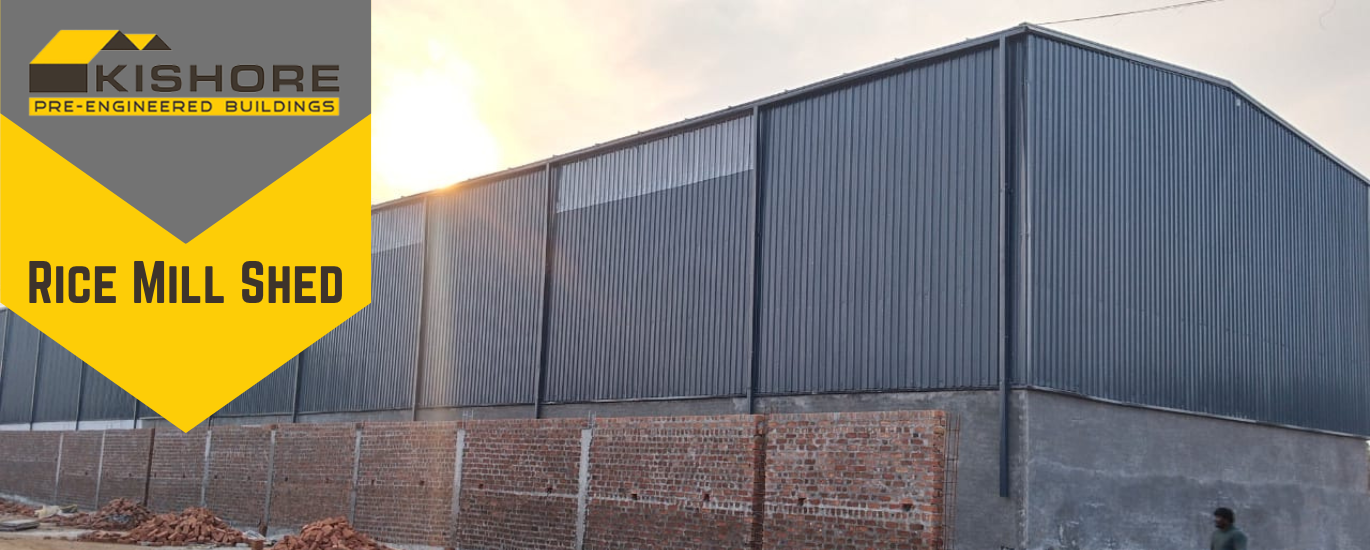
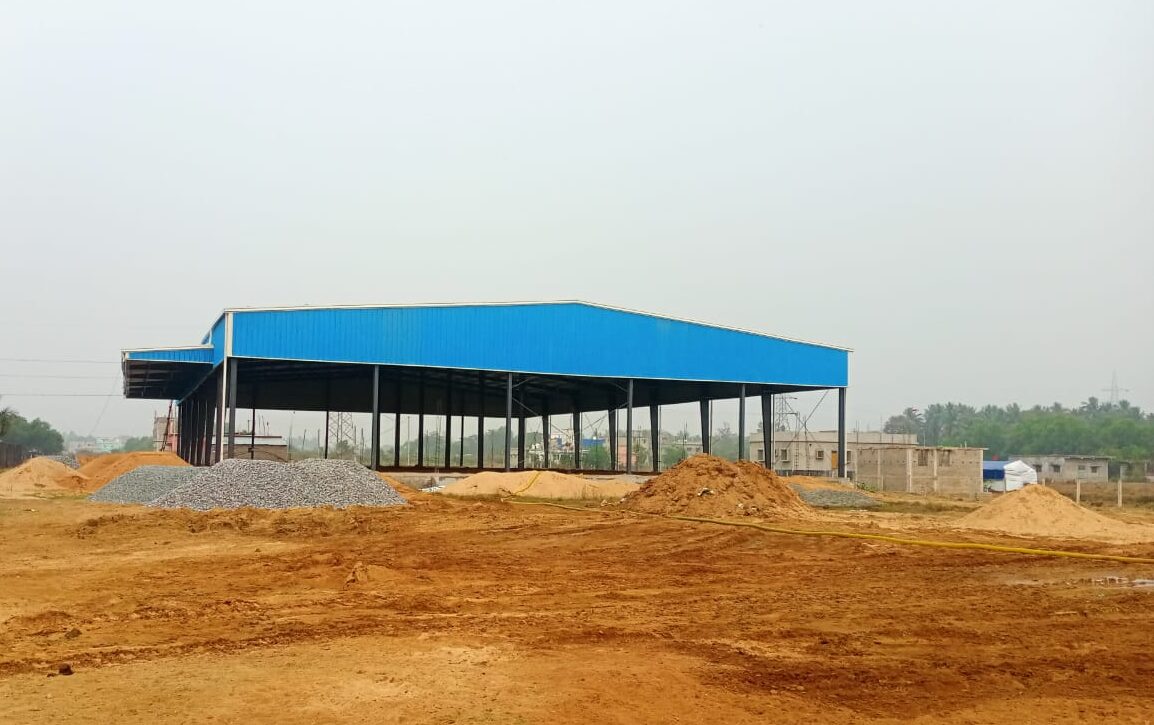
An open-air court is cheaper to start but loses playing days to monsoon, peak summer heat, and harsh afternoon glare — and almost all serious revenue comes from evening and night bookings that depend on covered, well-lit courts. A clear-span pre-engineered building roof turns a seasonal court into a year-round, all-weather, bookable asset. Because padel and pickleball courts are wide and need to be completely column-free over the playing area, PEB is the natural structural system: a single clear-span steel frame can cover one or several courts with no internal columns to interrupt play.
Key takeaway: A column-free PEB roof for padel or pickleball needs a clear span wide enough to cover the court plus run-off in one bay (commonly 12 m–25 m depending on court count), a clear height of 6 m–9 m, insulated roofing to cut heat gain, and translucent skylights for daytime ambient light. The same structural logic used for indoor badminton and sports halls applies here, with the span sized to the court layout.
| PEB Roof Parameter | Padel Facility | Pickleball Facility |
|---|---|---|
| Typical clear span (single court bay) | 12–15 m | 10–12 m |
| Clear height under truss | 8 m for competition (6 m min) | 7 m for competition (6 m min) |
| Roof insulation | PUF / rockwool / glasswool under sheet | PUF / rockwool / glasswool under sheet |
| Daylighting | Translucent FRP skylights, glare-controlled | Translucent FRP skylights, glare-controlled |
| Design codes | IS 800, IS 875 (wind), IS 1893 (seismic) | IS 800, IS 875 (wind), IS 1893 (seismic) |
| Ventilation | Ridge vents + turbo/air circulators | Ridge vents + turbo/air circulators |
Lighting for Padel and Pickleball Courts
Because the majority of bookings happen after sunset, lighting is not an afterthought — it is core revenue infrastructure. Both sports use small, fast-moving balls, so uniform, glare-free illumination at the playing surface is essential. Padel adds a complication: the glass walls can reflect poorly aimed luminaires straight into a player’s eyes, so fixtures must be positioned and shielded to avoid reflections off the glass. The detailed lux levels, uniformity ratios, and BIS standards are covered in our dedicated guide to lux level standards for indoor sports arenas.
Key takeaway: Target 300–500 lux for recreational play, 500–750 lux for club and league play, and 1000+ lux with uniformity ratio U0 of 0.7 for tournament-grade padel and pickleball courts. Use flicker-free LED with CRI 80+ (CRI 90+ if matches will be streamed), mount luminaires to avoid glare reflections off padel glass, and integrate mounting points into the PEB roof structure during design rather than retrofitting later.
Drainage, Ventilation and Climate Design for Indian Conditions
India’s climate puts specific demands on racquet-sport courts. In high-rainfall and coastal regions, outdoor or semi-covered courts need positive surface drainage and corrosion-protected steel and mesh — galvanised or powder-coated throughout, because chloride-laden coastal air will attack untreated steel within a couple of seasons. In hot interior zones, an uninsulated roof turns a covered court into an oven by midday, so insulated roofing and good cross-ventilation (ridge vents plus high-volume air circulators) are what keep the court usable through summer afternoons. These are the same monsoon- and climate-resilience principles we apply across all our covered structures, detailed in our work on cyclone and earthquake-resilient PEB structures.
Why Kishore Infratech for Padel & Pickleball Court Construction
Kishore Infratech Private Limited (KIPL), an ISO 9001:2015 certified PEB manufacturer headquartered in Hyderabad, Telangana, with 45+ years of steel fabrication experience and 700+ completed projects, designs and builds the column-free covering structures, steel court frames, and foundations that padel and pickleball facilities depend on. Based on our experience engineering stadiums and sports structures across South India, we coordinate the structural geometry with your surfacing, glazing, and lighting partners so the finished venue performs from day one — not after a year of fixes.
- Clear-span PEB roofs from 10 m to 25 m+ for single or multi-court column-free play
- Eaves and clear heights of 6–9 m sized for recreational through competition padel and pickleball
- Galvanised / powder-coated steel court frames engineered to IS 800 for tempered glass and mesh enclosures
- IS 875 (wind) and IS 1893 (seismic) compliant structural design with Staad.Pro simulation
- Insulated roofing (PUF / rockwool) and translucent FRP skylights for thermal comfort and daylight
- Corrosion-protected steel and mesh for coastal and high-humidity South Indian sites
- Pre-laid lighting truss anchorages and cable routes integrated into the structural design
- Project execution across Hyderabad, Bengaluru, Chennai, Vijayawada, Vizag, and Tier-2 cities of South India
Frequently Asked Questions
What is the standard size of a padel court in India?
A standard padel court (for doubles) is 20 metres long and 10 metres wide, enclosed by walls of glass and mesh. The back walls are 3 metres of tempered glass topped by 1 metre of mesh, giving a 4 metre total enclosure height. Because the walls are the boundary, the playing footprint and the court footprint are effectively the same 20 m × 10 m.
What is the standard size of a pickleball court?
The pickleball playing area is 13.41 m × 6.10 m (44 ft × 20 ft), the same court size for both singles and doubles. With recommended safety run-off around it, the total footprint should be about 18.3 m × 9.1 m (60 ft × 30 ft). The non-volley zone, called the kitchen, extends 2.13 m (7 ft) on each side of the net.
How many pickleball courts fit in the space of one padel court?
Roughly three pickleball courts fit in the ground area of a single padel court. A padel court needs about 200 square metres while a pickleball court with run-off needs about 60–70 square metres. This footprint difference is the main factor when deciding which sport to build on a given plot.
What kind of glass is used for padel courts?
Padel courts use tempered (toughened) safety glass, 10 mm minimum and 12 mm preferred for competition and outdoor courts. The glass is a playing surface because the ball can be played off it, so it must withstand repeated ball impact and player rebound. Ordinary annealed glass must never be used as it can shatter dangerously.
What surface is best for padel and pickleball courts?
Padel uses sand-filled artificial turf with a 12–15 mm pile over a concrete or asphalt base for a controlled bounce. Pickleball uses an acrylic or cushioned-acrylic hard-court system over concrete for a true, fast bounce. In both cases the base must be laser-levelled and well drained, because surfacing cannot correct an uneven base.
What roof height is needed for an indoor padel or pickleball court?
A minimum clear height of 6 metres under the roof is required for recreational play. Competition padel needs about 8 metres and competition pickleball about 7 metres of clear height to allow for high lobs without interference. A multi-use facility should be designed to the higher figure.
Why are PEB structures ideal for padel and pickleball courts?
Both sports need a completely column-free playing area, which a clear-span pre-engineered building delivers with a single steel frame and no internal columns. PEB also allows fast construction, insulated all-weather roofing, integrated lighting mounts, and spans wide enough to cover single or multiple courts in one bay.
How much lighting does a padel or pickleball court need?
Target 300–500 lux for recreational play, 500–750 lux for club and league play, and 1000 lux or more with a uniformity ratio of 0.7 for tournaments. Use flicker-free LED with CRI 80 or higher, and on padel courts position luminaires to avoid glare reflecting off the glass walls.
Should I build an indoor (covered) or outdoor court?
A covered court earns far more because it can be booked year-round and in the evenings regardless of monsoon, heat, or glare, and most revenue comes from night-time bookings. An outdoor court is cheaper to start but loses many playing days to weather. A clear-span PEB roof is the most common way to make a court all-weather.
What special design is needed for courts in coastal South India?
Coastal sites need corrosion protection on all steel and mesh — hot-dip galvanising or powder coating — because chloride-laden air attacks untreated steel within a couple of seasons. Positive surface drainage, wind-rated glass and frames per IS 875, and insulated roofing for humidity and heat are also essential along the AP, Tamil Nadu, and Odisha coasts.
How long does it take to build a covered padel or pickleball facility?
The PEB covering structure itself is fast because components are pre-engineered and pre-fabricated, with the structural shell often erected in a few weeks once foundations are ready. Total project time depends on foundations, court surfacing, glazing, and lighting. See our guide on PEB construction timelines for a stage-by-stage breakdown.
Can one structure house both padel and pickleball courts?
Yes. A single clear-span PEB hall can be planned with padel courts in wider bays and several pickleball courts in the remaining area, since both share the same roofing, lighting, and ventilation logic. The structure should be designed to the most demanding clear-height requirement, which is padel competition height.
How important is the foundation and base levelling?
It is critical for both sports. Padel frame anchorage and pickleball bounce consistency both depend on a base that is laser-levelled, typically to within a few millimetres. A poor base produces dead spots, drainage problems, and frame misalignment that surfacing and glazing cannot fix afterwards.
Data methodology: Court dimensions and specifications in this guide are based on International Padel Federation (FIP) court regulations, USA Pickleball / International Pickleball Federation (IPF) court standards, and Indian construction codes IS 800 (steel design), IS 875 (loads), IS 1893 (seismic), and NBC 2016. Structural, glazing, surfacing, and lighting recommendations draw on Kishore Infratech Private Limited’s experience engineering PEB sports structures across South India. All figures are typical reference values for planning and must be verified by qualified consultants for the specific site, climate zone, and level of play.
Final Thoughts: Build the Sport, Not Just the Court
Padel and pickleball are riding a genuine, fast-moving wave of demand in India — but the facilities that win are the ones engineered correctly from the first sketch. Padel lives and dies by its structural glass and frame; pickleball lives and dies by a true, level surface and generous run-off. Both reach their full earning potential only when they are covered by a column-free, well-lit, all-weather roof that lets them operate every evening, through every season. The dimensions, surfacing, and structural specifications are not optional details — they are the difference between a venue that books out and one that fights for players.
The FIP and IPF standards define the geometry; Indian codes IS 800, IS 875, and IS 1893 define the structural floor; and the local climate defines the envelope. The owner’s job, with the right design and construction partner, is to bring all three together into a single coordinated facility — court frame, surfacing, roof, and lighting designed as one system from Day 1.
Get a Free Design Review & Indicative Estimate.
Share your plot location and requirement — our engineers call you back within 24 hours with a PEB factory or warehouse design and transparent costing.
- Clear-span PEB buildings engineered per IS 800
- Wind & seismic design per IS 875 Part 3 / IS 1893
- In-house fabrication at Jeedimetla, Hyderabad
- Faster erection than RCC — months, not years
- 45+ years steel fabrication, 700+ projects delivered
Prefer to speak directly? Call 9440407852
Our PEB engineers will call you back shortly with your free PEB proposal and quotation.
Want a faster response?
📱 Chat with us on WhatsAppPlan Your Padel or Pickleball Facility With Kishore Infratech
If you are planning a padel club, a pickleball facility, or a multi-court racquet-sport venue anywhere in South India, the covering structure and court frame must be engineered around the sport from the very first concept. Kishore Infratech’s design team coordinates clear span, clear height, roof profile, corrosion protection, and lighting mounts with your surfacing and glazing partners so the finished venue performs from day one.
Call us at +91 9440407852 or visit kishoreindustries.in to discuss your padel or pickleball court project. We work across Hyderabad, Bengaluru, Chennai, Vijayawada, Vizag, and Tier-2 cities of South India.